
The "Top-Tier" LV Ivy Replica is Out. Here is Exactly Why It Still Feels Fake in Your Hands
Stop reading guides for trash-tier fakes. When top independent factories nail the LV canvas and fonts, the real test comes down to vibes you can actually feel. Here is how to spot the 2% difference on the Ivy WOC without a microscope—and why reps still lose that "luxury slouch."
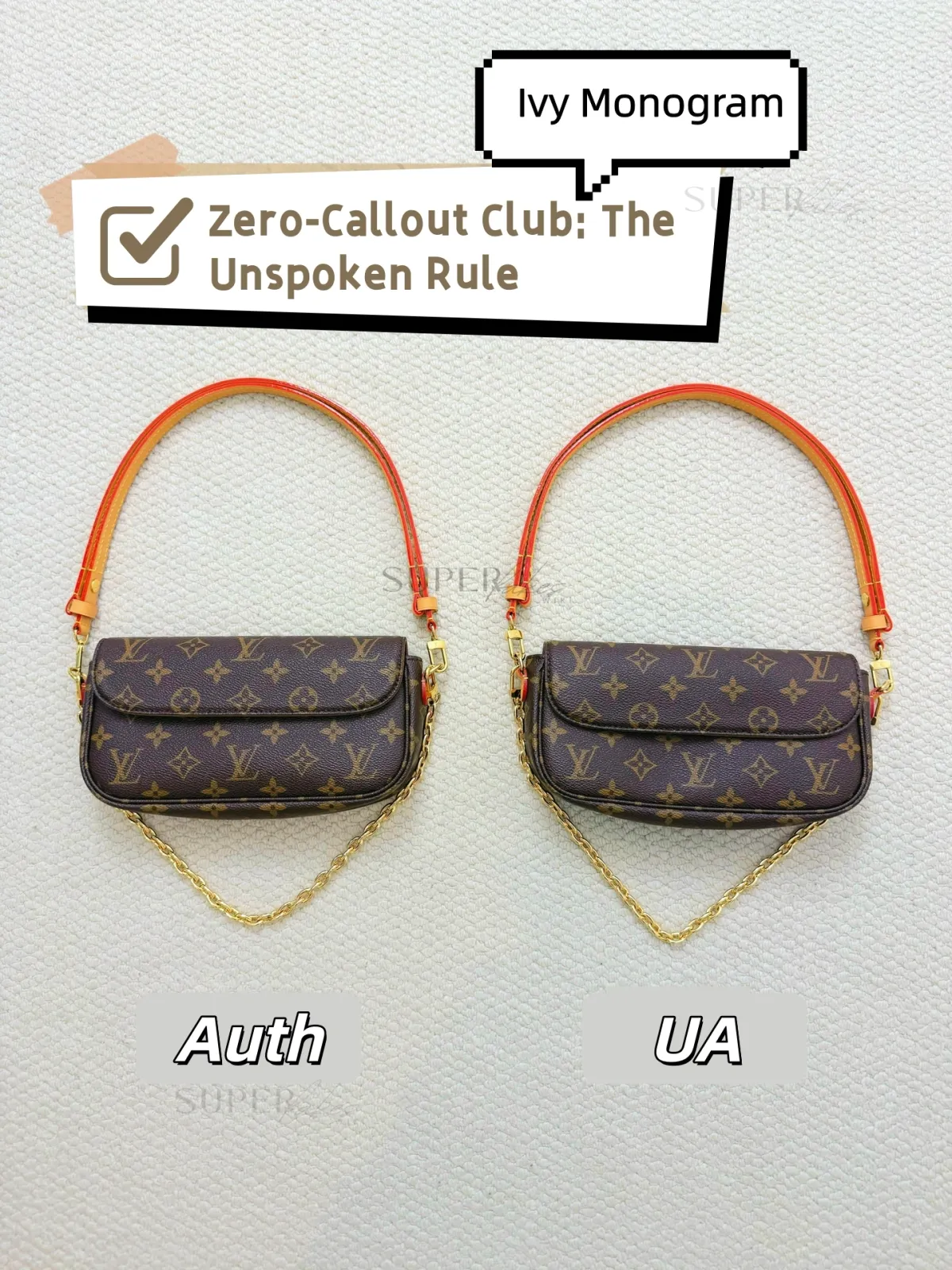
Most authentication guides are written for obvious, budget-tier fakes—the ones you can spot from across the room. We aren't doing that today. Instead, we are putting a retail Louis Vuitton Ivy WOC under a microscope against a top-tier independent factory version to see where industrial replication hits its absolute limit.
Top-tier independent makers have already nailed the obvious stuff: the canvas grain texture, the macro dimensions, and the font alignments are a given. To spot a difference, you have to look past the surface and examine the micro-details of luxury manufacturing.
Here are the four tells currently separating the two:
1. The Silhouette: Slouch vs. Tension
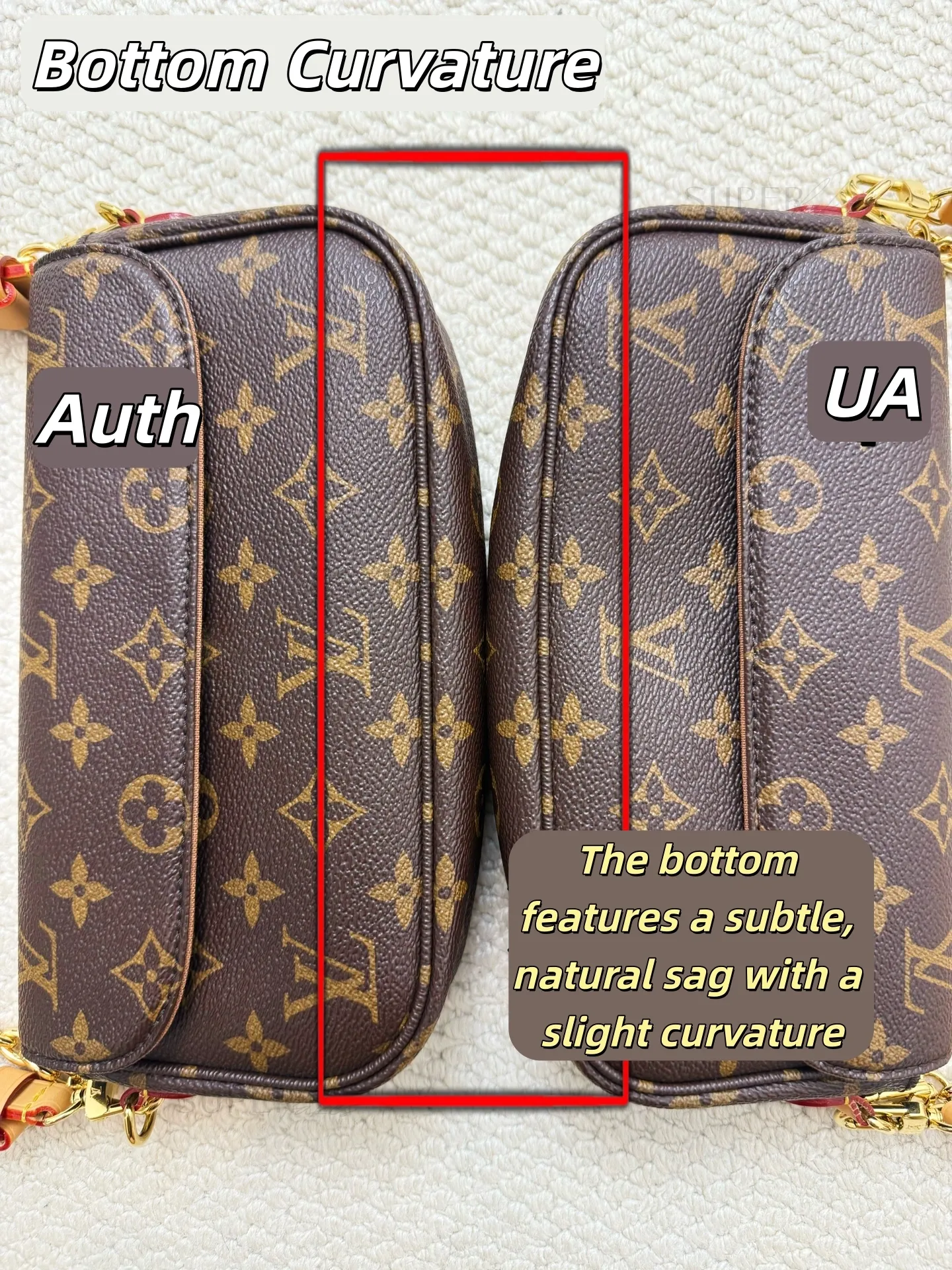
🧵 LV’s Monogram Canvas is a coated cotton textile, not rigid plastic. When you set an authentic Ivy down, it doesn't stand stiffly like a cardboard box. It has a lazy, microscopic slouch at the base—a natural sag of the canvas under its own weight.
High-end replicas mimic this slouch beautifully, avoiding the rigid look of cheap fakes. The only giveaway is at the corner seams. On a retail bag, the leather binding at the sides shows an organic suppleness. The replica retains a slightly tighter, freshly machined stitch tension at the corners, giving away its recent exit from the workshop.
2. The Edges: Aged Pigeon-Blood vs. Fresh Lacquer
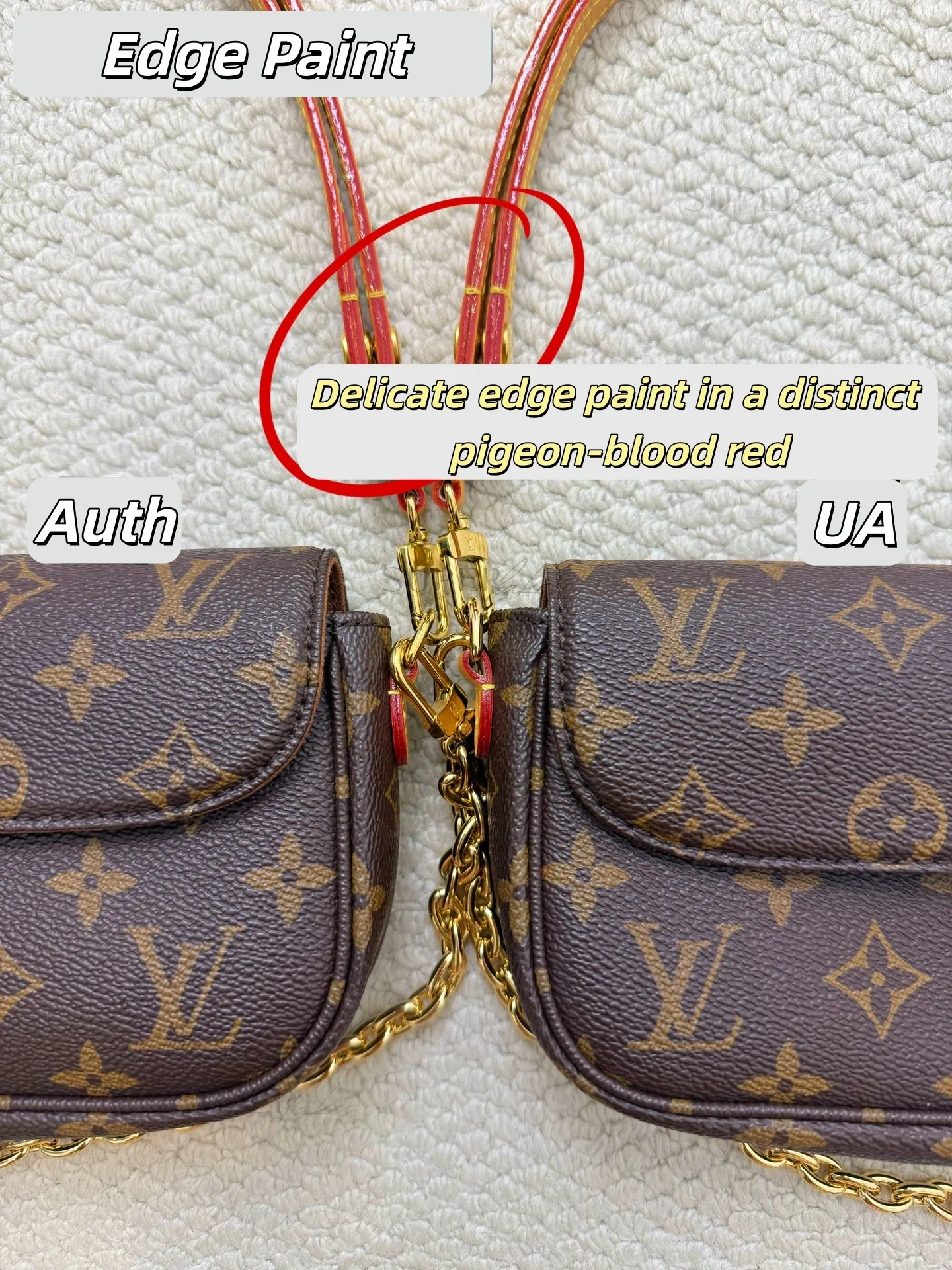
☕ The edge paint on the Vachetta leather is a dead giveaway for cheap batches, which usually sport a bright, neon-red glaze. Top-tier makers use the correct dark burgundy compound—often called "pigeon-blood red."
The difference here comes down to time and physics. On the retail piece, the paint has sunk deep into the porous leather grain, creating a completely flush, matte profile. The replica lacquer sits just a hair higher on the surface, looking a fraction crisper because it hasn't yet gone through the natural oxidation and friction that comes with daily wear.
3. The Hardware: Hand-Finished vs. CNC Precision
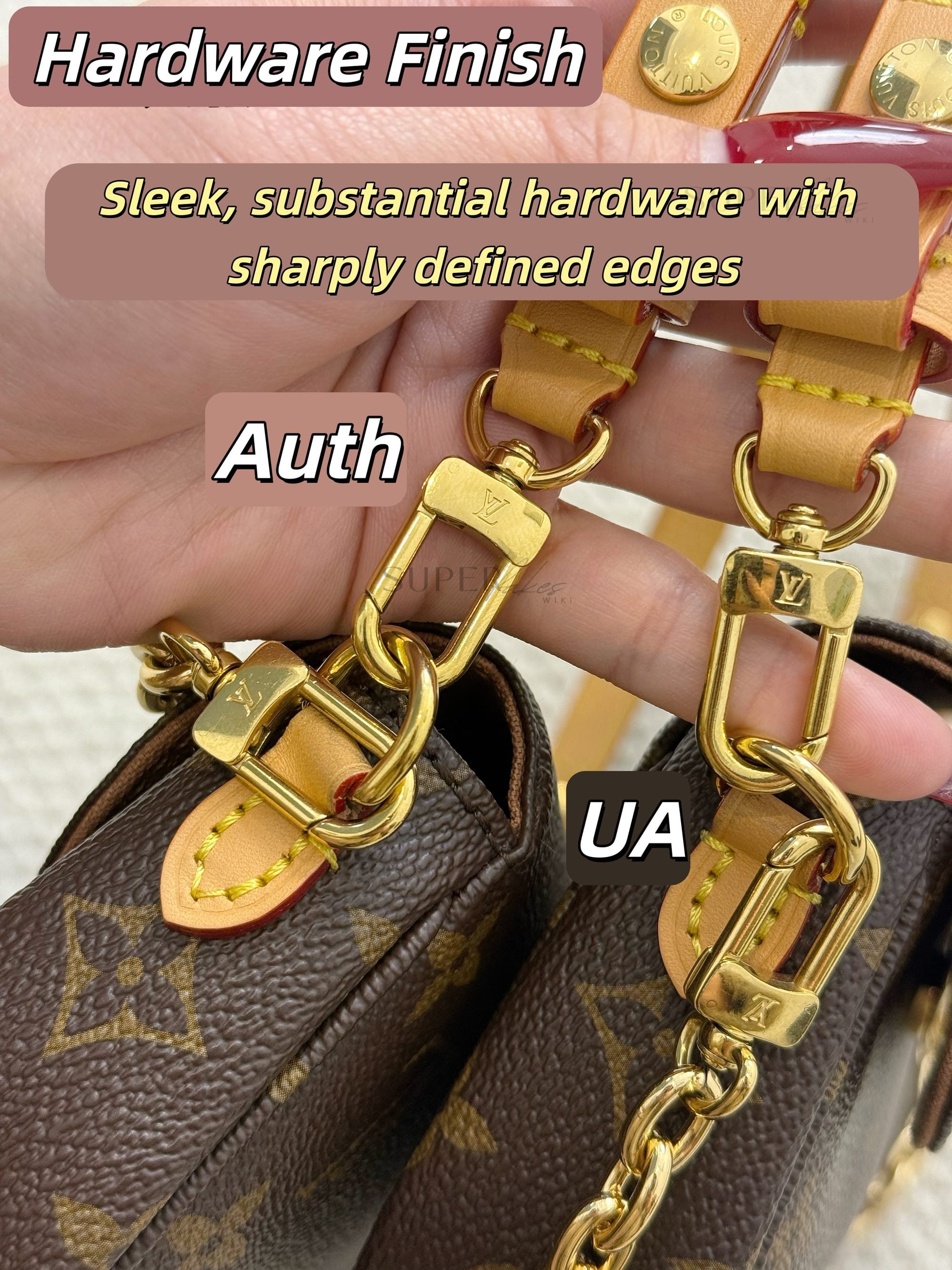
🤫 The Ivy’s brass-toned hardware is a contradiction: it looks chunky and rounded from afar, but the interior corners and recessed stampings are surgically sharp.
Top-tier replicas match the heavy alloy weight and the muted bronze tone perfectly. But if you look inside the deepest, tightest curves of the clasp hooks, the difference emerges. The retail hardware receives a final hand-polishing step that removes all micro-friction. The replica, while incredibly crisp, still reveals faint, directional micro-lines left by high-precision CNC cutting wheels in those hidden blind spots.
4. The Clasp Stamping: Hydraulic Depth vs. Die Pressure
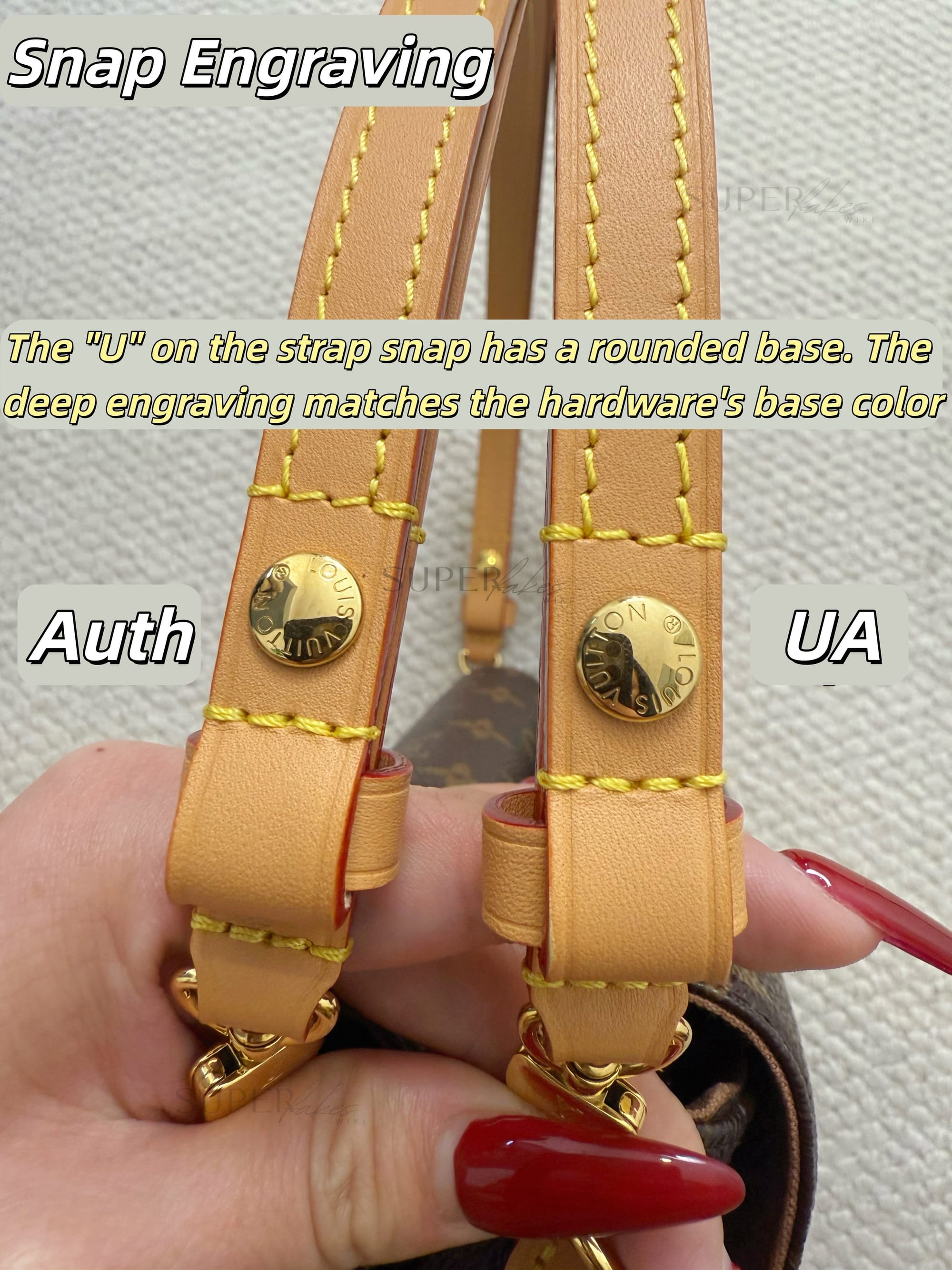
🔍 If you flip the leather strap to inspect the brand stamp inside the snap button, the letter "U" is the tell. It needs a wide, sweeping circular base—never a flat bottom or a sharp point.
Both pieces use the exact same proprietary font geometry. The distinction is entirely about the pressure of the machinery. Retail characters are driven into the metal via heavy hydraulic stamping, leaving smooth, highly reflective channels inside the letters. The replica die strikes with immaculate alignment, but under a loupe, the metal displacement at the bottom of the "U" shows a fraction less depth, scattering light differently.
Budget batches fail at the canvas and the color, but when you get to top-tier independent manufacturing, the gap shrinks to a war of microns. True authenticity at this level isn't about blatant errors; it’s simply down to the final 2% of hand-finishing that an industrial production line can't scale.
#HandbagAuthentication #SupplyChainTruths #LVIvyWOC
![[Trusted Sources] Top-Tier Luxury Bags: Chanel, Hermès, Dior, LV & Core Elite Houses](/content/images/2026/06/1738141322538-homepagecorpoonedesktop23jpg_3240x5760.jpg)