Stop Squinting: Why 99% of Factories Screw Up the Goyard Anjou
Stop squinting at studio photos. Mass factories screw up the Goyard Anjou because machine perfection is the giveaway—authentic soul relies on organic flaws. Skip the trash. Access the private database of top-tier factory albums (Bibi, ,White, Jing, Kata) now.
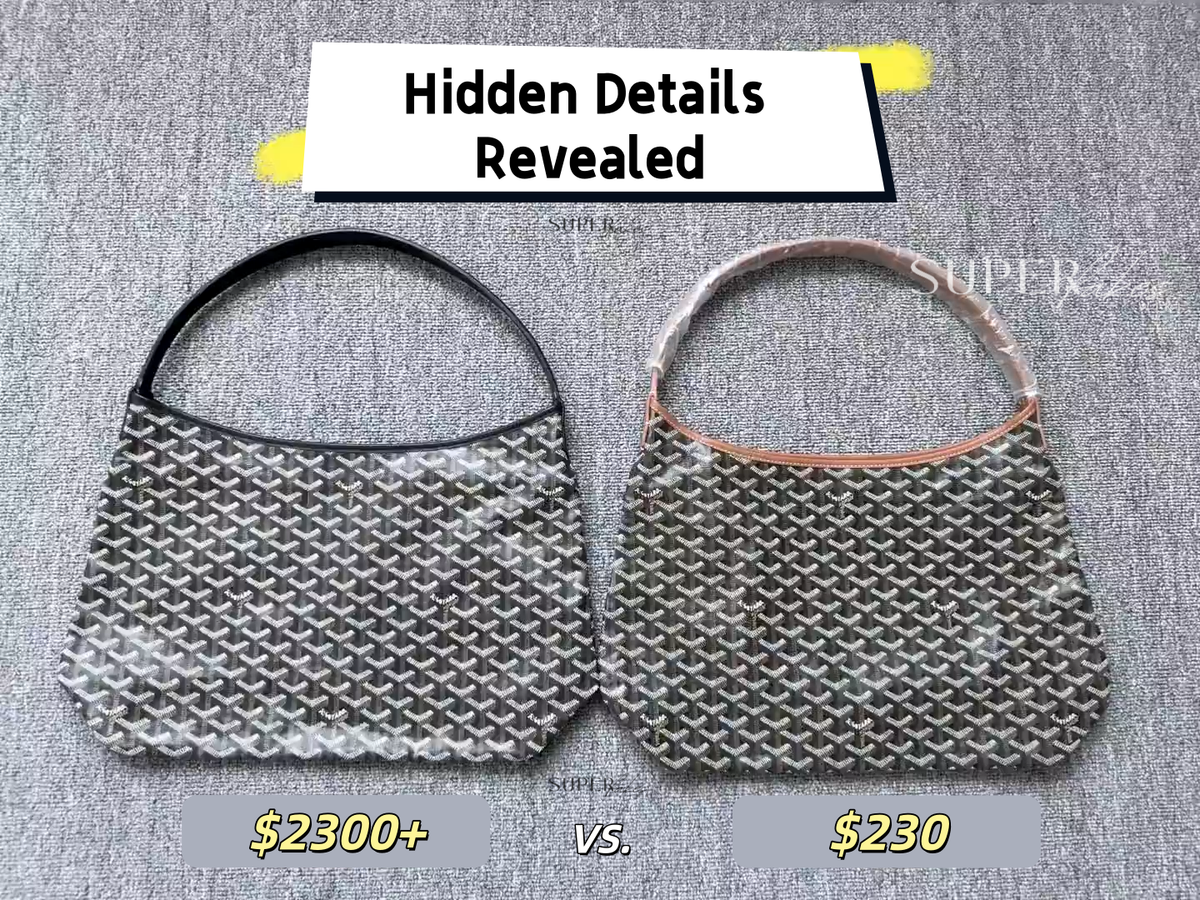
According to recent luxury authentication reports, Goyard tops the list with a staggering 18.92% counterfeit rate—meaning nearly one in five items sent for authentication is a fake.
Just last week, a reader shared her nightmare: she paid full retail-equivalent pricing on the secondary market for what she thought was a pristine Anjou Hobo, only for it to fail certification over a microscopic hardware flaw. Her takeaway? "At this point, you either buy directly from the boutique, or you save your thousands, buy a top-tier UA batch, and use the cash you saved to buy something else. The secondary market is a minefield."
If you just want to skip the breakdown and go straight to the trusted source albums (Bibi, Jing, Kata, etc.) via WhatsApp, you can access the private database right here:
Otherwise, let's talk about why the mass factories keep screwing this bag up.
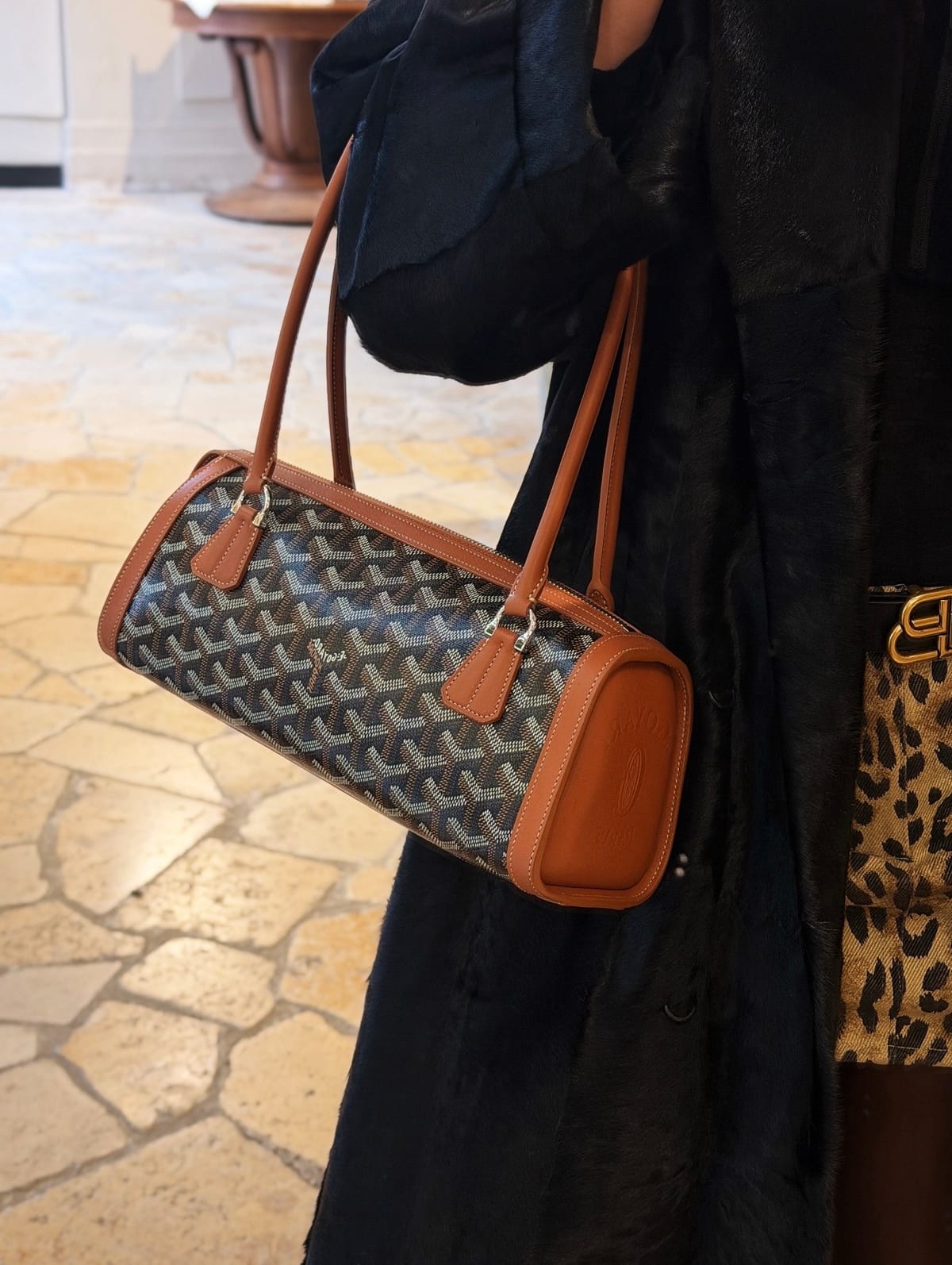
The Goyard Anjou Hobo looks deceptively simple—it’s slouchy, lightweight, and completely devoid of heavy metal logos. Because of that, low-tier factories think it’s an easy paycheck. They’re dead wrong. The entire soul of a Goyard bag relies on microscopic, irregular human imperfections.
We aren't talking about the cheap plastic toys you find on casual marketplaces. We’re putting a top-tier factory batch under a high-magnification lens right next to a retail piece.
Even when the best independent lines manage to mimic the overall texture, the final boundary comes down to five specific microscopic tells.
1. The "Dandelion" Dots
🧵 Authentic Goyard canvas is famous for its hand-dotted look. Under a macro lens, the edges of those tiny printed dots aren't perfectly clean. They have a slight, fuzzy "bleed"—almost like a dandelion. The paint actually overlaps slightly in layers.
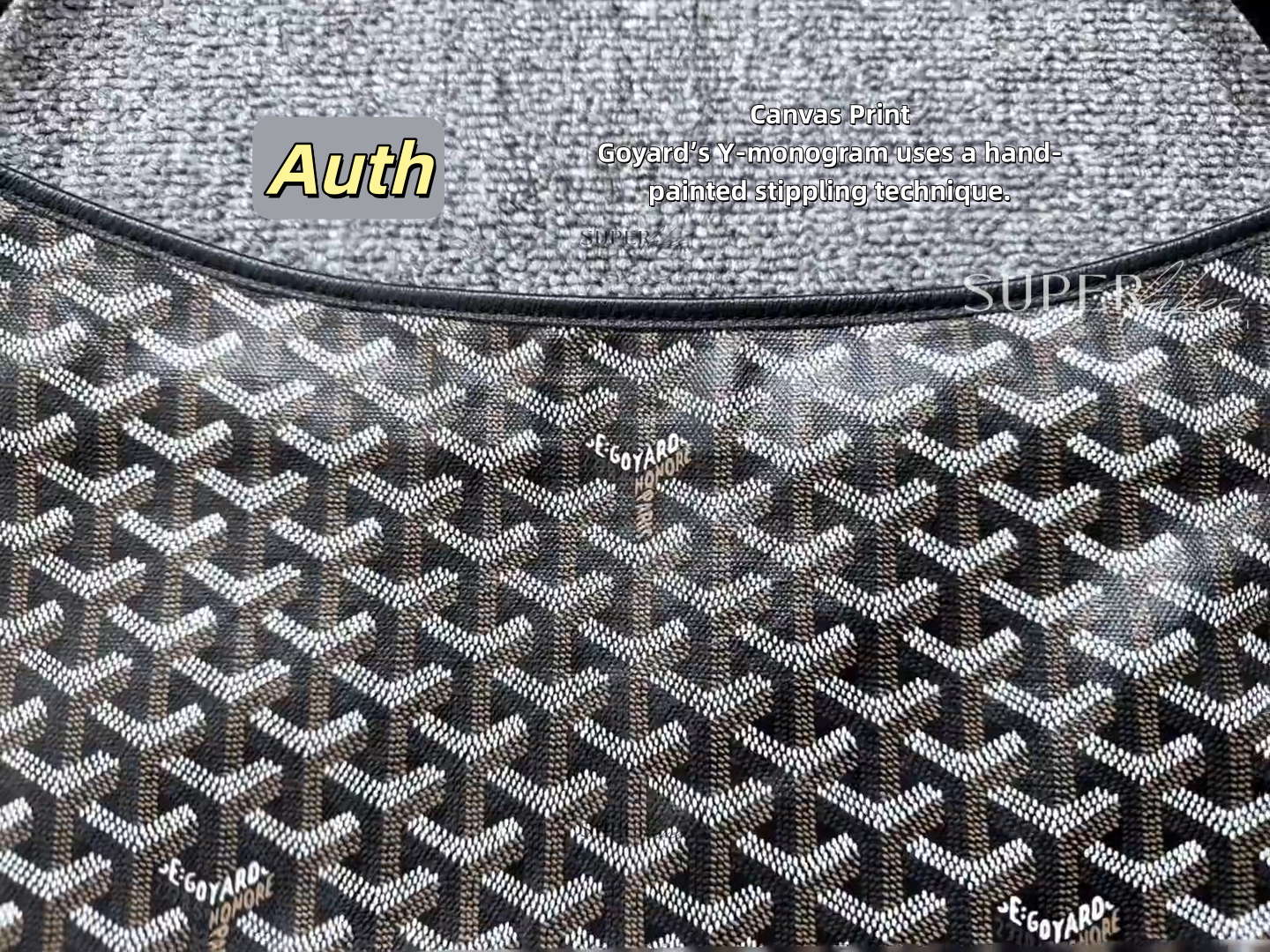
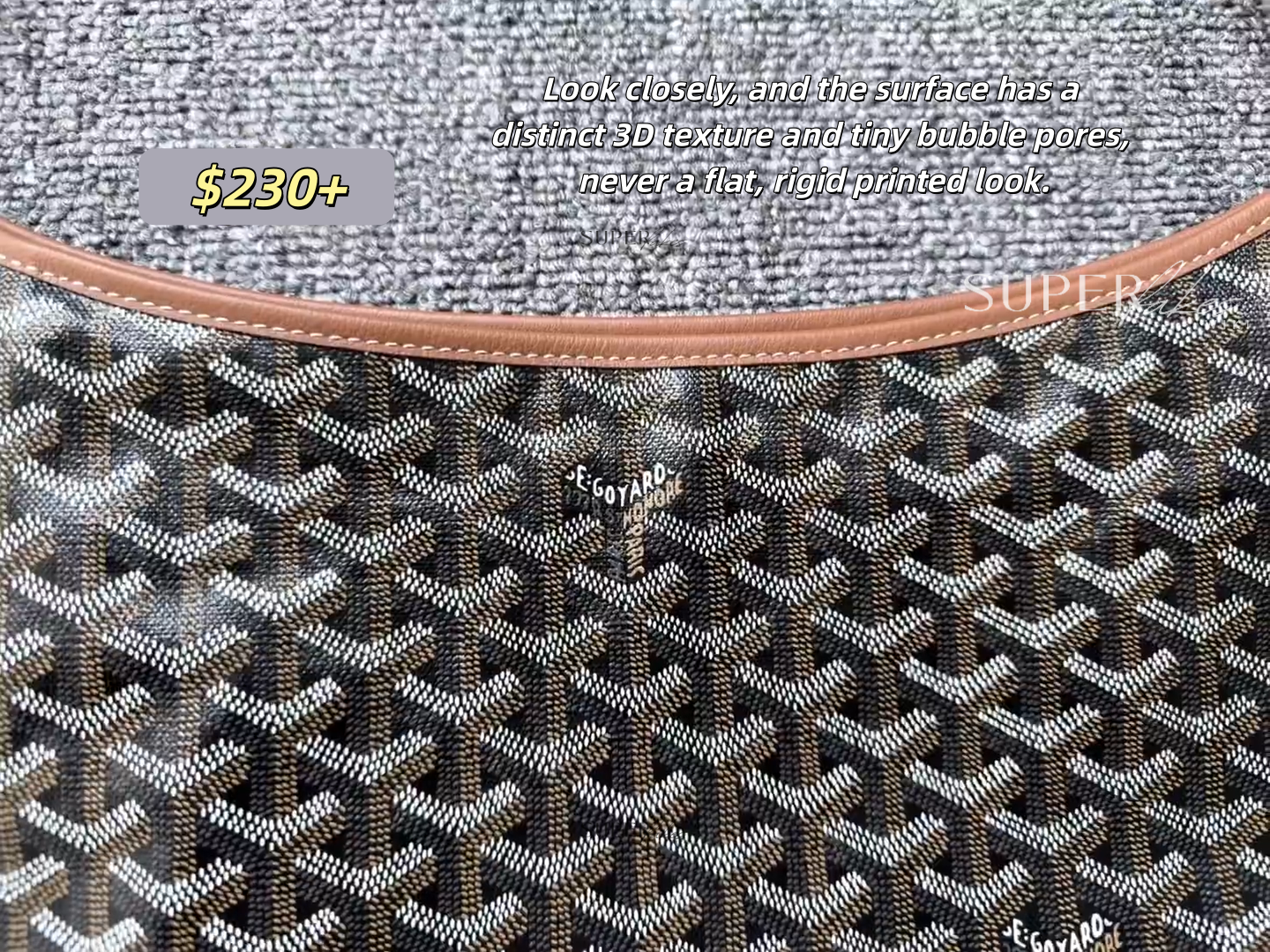
Mass-market copies look like they came out of a flat office inkjet printer. Top-tier batches actually replicate the raised, bumpy, multi-layered paint dimension perfectly. The only way to tell them apart here is pure chaos: the authentic retains a fraction more random spacing, while high-end machinery is actually too perfectly controlled.
2. The Waxy Supple Slouch
☕ True Goyard canvas is a specific blend of linen and cotton before it gets its protective coating. It’s incredibly pliable. It allows the Hobo to get that elegant, collapsed shape without losing its structural integrity. The reflection isn't a plastic shine; it's a muted, waxy, watery glow.
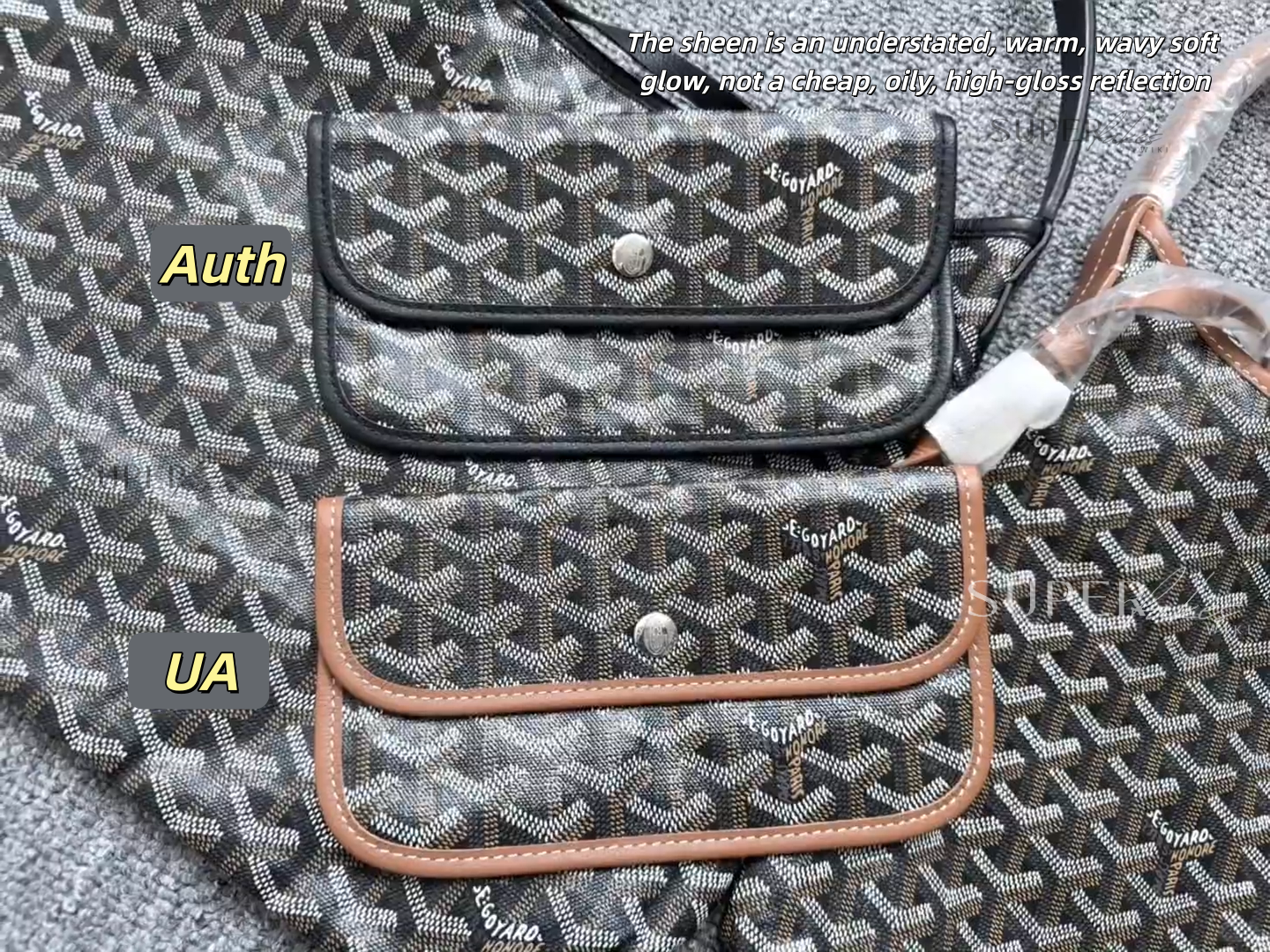
Low-tier batches feel like stiff cardboard. A true top-tier batch uses the correct linen-to-cotton ratio, matching the weight and drape perfectly. Side by side, the finish is basically identical—the only difference is that a retail bag has usually undergone some environmental settling, making it feel slightly softer out of the box than a pristine, fresh-off-the-line factory piece.
3. The Antique Sandblasted Hardware
🔍 Authentic Goyard metal parts have a serious, vintage weight to them. Look closely inside the engraved grooves of the zipper pulls. The metal isn't bright and shiny in there; the bottom of the recessed text has a matte, sandblasted, slightly oxidized antique-gold look.
Cheap replicas use standard shiny yellow electroplating. Top-tier factories bypass this by using custom high-density alloys. Under a loupe, the text alignment is flawless. The absolute micro-tell is deep in the corners of the lettering, where the authentic artisan's oxidation is just a hair deeper, casting a slightly darker shadow.
4. The 16-Stitch Tension
🪡 Take a look at the strap attachments. The brand standard requires exactly 16 tight, uniform stitches, locked down with double backstitching. The thread is intentionally recessed, nested neatly into a pre-cut groove in the leather so it doesn't rub against your shoulder and fray.
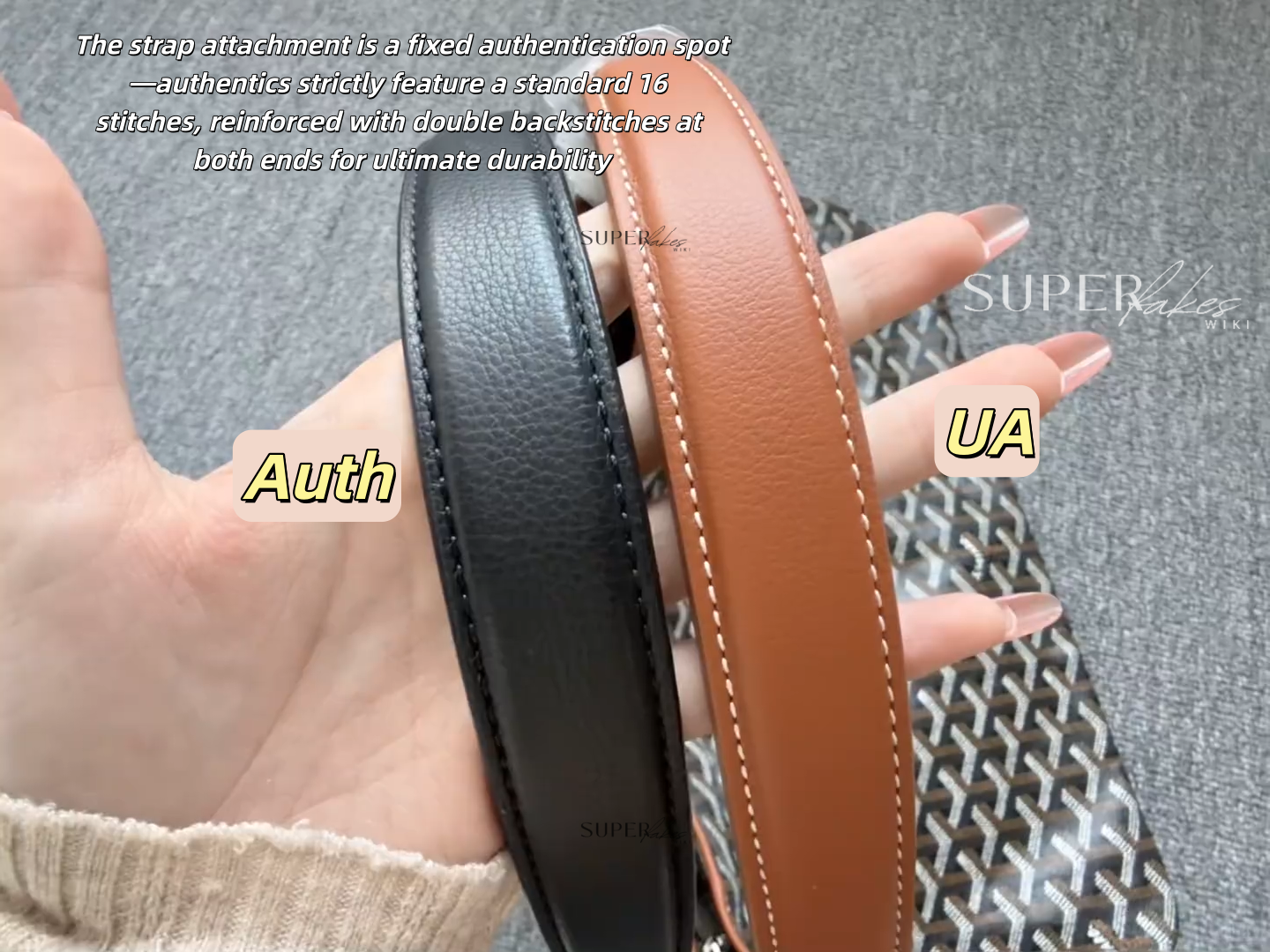
The best factory batches match the 16-stitch count and thread thickness perfectly. But look at the leather tension: a human artisan pulls the thread by hand, leaving slightly deeper indentations at the pivot points. A specialized machine delivers perfectly uniform tension from the first stitch to the sixteenth. It’s ironic, but the machine's perfection is the giveaway.
5. The Intentional Font Flaws
🔤 Goyard’s heat stamping is beautifully messy. The letter "O" is thick on the sides but thin at the very top and bottom. The "Y" is totally asymmetrical (the left branch is visibly thicker than the right). The "R" has a distinct, kicked-out leg.
Budget replicas fail immediately because they use stock computer fonts. Top-tier factories build custom steel molds to replicate these exact geometric weirdnesses. The font shapes match perfectly. The only microscopic distinction is the stamping pressure: a human hand varies by a fraction of a micron across the leather panel, while a factory press creates a perfectly leveled stamp from edge to edge.
True tier-one replication isn't about fixing "obvious mistakes" anymore. It's an entirely different game—it’s about trying to industrialize the organic mistakes of a real human being.
Are you looking for a specific factory batch, or trying to figure out if a seller is lying to you about their source?
 SuperFakesWiki
 SuperFakesWiki